Carpenter ants are among the most common pests homeowners encounter, and they can cause significant structural damage if left unchecked. Unlike termites, which consume wood, carpenter ants excavate it to create their nests. In this post, you will learn about their behavior, signs of infestation, and effective management strategies.
The Life Cycle of Carpenter Ants
Carpenter ants undergo a four-stage life cycle: egg, larva, pupa, and adult. This cycle can take several weeks to a few months, depending on environmental conditions. Carpenter ants typically become active in spring and remain so through summer, with colonies peaking during this time.
Identifying Carpenter Ant Species
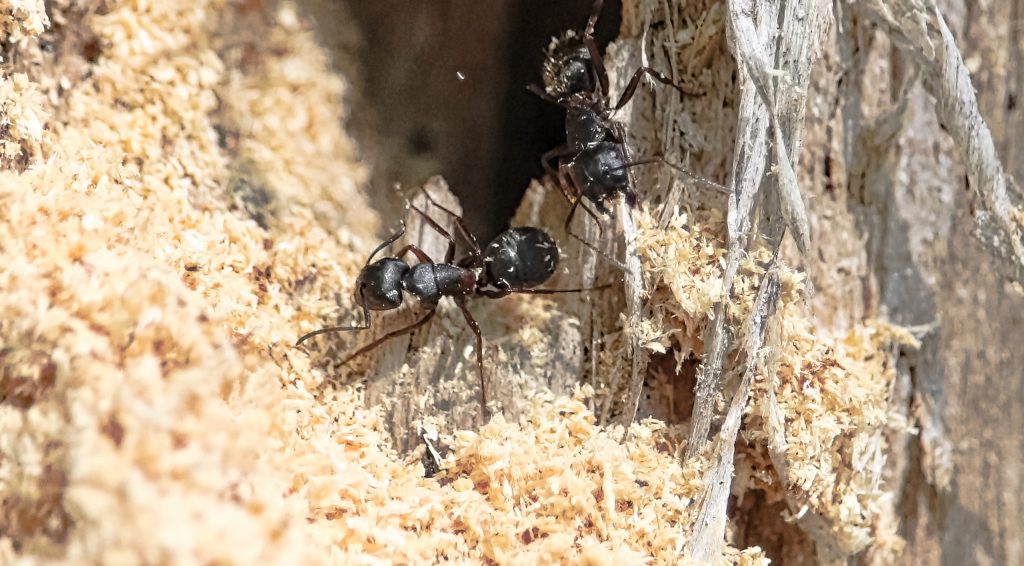
The black carpenter ant is the most commonly found species. These ants are usually black or bicolored, have smooth bodies, and range from 1/4 to 1/2 inches long. Their size and color vary based on species, but they all share similar nesting behaviors.
Signs of Infestation
Early detection is critical to managing carpenter ant infestations. Here are some signs to look for:
- Sawdust Piles: Unlike termites, carpenter ants leave behind fine wood shavings, often found near their nesting sites.
- Hollow Sounding Wood: Tapping on wooden structures may reveal a hollow sound, indicating tunneling by the ants.
- Visible Ant Trails: Look for trails near food sources or moisture.
- Winged Ants: During mating season, you may notice winged ants (swarmers) inside or outside your home, indicating an established colony.
Management Strategies
Effective management of carpenter ants involves several proactive strategies. Here’s how you can protect your home:
1. Inspection and Monitoring
Regular inspections are crucial. Check areas prone to moisture, such as basements, attics, and windows. Look for signs of nesting and consider using bait stations to monitor activity.
2. Eliminate Food Sources
Carpenter ants are attracted to food, especially sugary substances. Keep food sealed and stored correctly, and promptly clean up spills and crumbs. Reducing food availability can deter them from entering your home.
3. Moisture Control
Since carpenter ants thrive in damp environments, repairing leaks and improving ventilation can help eliminate potential nesting sites. Ensure that gutters are clean and direct water away from the foundation to minimize moisture.
4. Physical Barriers
Seal cracks and crevices around your home’s foundation, windows, and doors to prevent ants from entering. Caulk or other sealing materials can block access points.
Call Insight Pest Solutions
Carpenter ants can pose a significant threat to homes’ structural integrity. By being proactive and understanding the signs of infestation, homeowners can take steps to protect their properties.
Implementing preventive measures and conducting regular inspections will help ensure your home remains safe from these destructive pests. If you ever suspect you have an infestation of carpenter ants or other pests, do not hesitate to contact Insight Pest Solutions! Our experienced team of technicians and helpful staff are here to help you maintain a pest-free home!